Serving Novato, CA and surrounding areas. (628) 348-0057
A deck that tilts, a porch pulling away from the house, or a new addition that needs a solid base all start with the right footings. We dig, form, and pour concrete footings in Novato designed for clay soils and California seismic requirements - with city permits and inspections handled from start to finish.
Concrete footings in Novato are the underground bases that hold up decks, additions, fences, and structures - most residential projects take one to two days of active work after permit approval, with a week of curing before framing can begin.
Think of footings as the feet of a table: if they are not solid and in the right place, everything above them shifts, cracks, or sinks. In Novato, clay-heavy soils that move with the seasons make proper footing depth and design more critical than in many other parts of the Bay Area. Any deck, room addition, or accessory structure attached to your home needs footings that account for local soil conditions. If you are also planning work on the structure above, we coordinate footing projects alongside foundation installation so both phases are handled by the same crew.
The City of Novato requires a permit and a pre-pour inspection for most footing work - a city official checks depth, width, and steel placement before any concrete goes in. The American Concrete Institute publishes the structural standards that guide reinforcement design, and a qualified Novato contractor handles the permit and inspection process on your behalf.
If you can see a gap opening between your deck and the house, or if the deck surface slopes noticeably in one direction, the footings underneath may have shifted or settled. In Novato's clay-heavy soils, this kind of movement is more common after a wet winter followed by a dry summer. Do not wait on this - a tilting deck can become a safety issue quickly.
Cracks that run diagonally from corners, or that are wider at the top than the bottom, often point to uneven settling in the footing below. This is especially worth watching in older Novato homes from the 1950s and 1960s, where original footings may not have been built to current standards. A contractor can assess whether the cracking is cosmetic or structural.
Any new structure attached to your home - or a freestanding one like a garage or large shed - needs proper footings before framing can begin. This is not optional in Novato; the city requires it as part of the permit process. Starting with a conversation about footings early saves you from having to redo work later.
When footings shift, the structure above them shifts too - and one of the first signs is doors or windows that suddenly stick, will not latch, or have visible gaps at the corners. If this is happening in multiple places around your home at the same time, it is worth having a contractor look at the foundation and footing condition rather than just adjusting the doors.
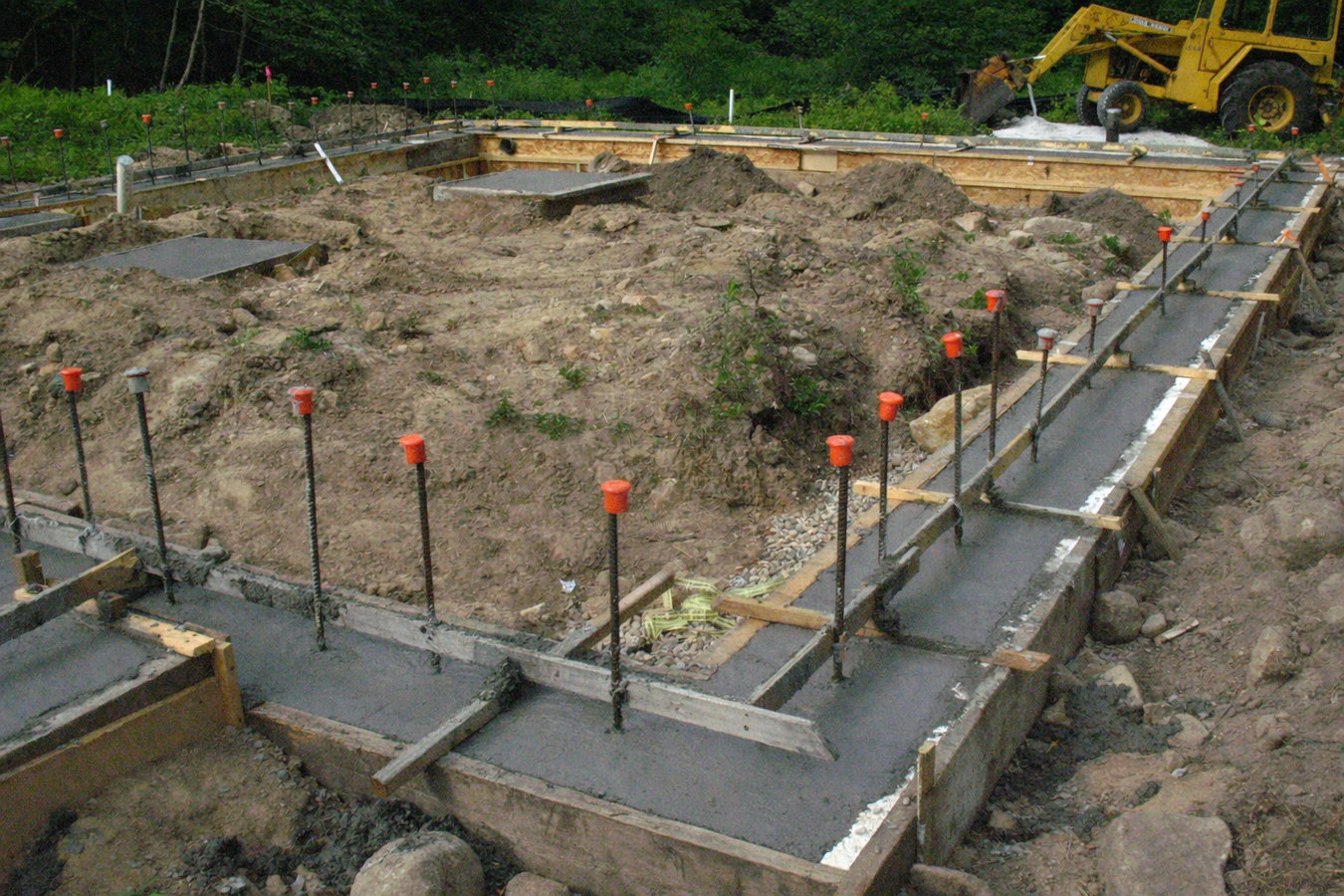
We dig, form, and pour both continuous footings and pier footings for residential projects across Novato. Continuous footings run along the perimeter of a structure as a long trench of concrete, used for additions, foundation walls, and load-bearing walls. Pier footings are individual cylindrical or square columns dug at specific points - the standard choice for decks, pergolas, and freestanding accessory structures. Both types include steel reinforcing bars sized for Novato's seismic requirements and clay soil conditions. For homeowners building a larger addition or new structure, footing work often runs alongside foundation installation so the underground work is fully coordinated under one contractor.
Every project begins with a site visit to look at the soil conditions, proximity to utilities, and access for equipment. We handle the City of Novato permit application and schedule the pre-pour city inspection - the inspector checks depth, width, and steel placement before any concrete is ordered. After the pour, we let the concrete cure for about a week before advising you that it is ready for the next phase. For homeowners tackling the structure above ground at the same time, we also handle foundation raising when existing footings need to come up to current standards.
Best for room additions, foundation walls, and load-bearing perimeter structures that need a solid trench of concrete below the frost line.
Best for decks, pergolas, and freestanding accessory structures - individual columns dug at specific load points and reinforced for seismic movement.
Best for older Novato homes where original footings have shifted, cracked, or were never built to current seismic and soil standards.
Large parts of Novato, particularly in the flatlands east of Highway 101, sit on clay-heavy soils that swell when wet and shrink when dry. That seasonal movement puts footings under constant stress from below - and a footing that was not designed for this behavior will shift, crack, or push out of position over time. Novato also sits in an active seismic region near the Rodgers Creek Fault, which means California's building code requires footings here to include steel reinforcement and meet specific depth and width standards designed to handle ground shaking. Both of these conditions - clay soil and seismic exposure - mean that footings in Novato need more careful engineering than a generic plan allows. We have worked on footing projects across Novato long enough to know which neighborhoods have the most problematic clay profiles and how to account for it in every footing we place.
Novato also has a large share of older housing stock from the 1950s through 1970s, and many of these homes have had additions or structures added over the decades - sometimes without permits. When we dig for new footings near an older structure, we occasionally find unexpected conditions underground: old concrete, buried debris, or previous footings that do not meet current standards. This is more common in Novato's older neighborhoods like Downtown and parts of Ignacio. Homeowners in Petaluma and nearby Sonoma County cities face similar conditions, and we bring the same approach to every site - clear communication about what we find and how any changes to scope are handled.
We respond within one business day and schedule a free visit to look at your property - soil type, access for equipment, and proximity to utilities all affect cost. You receive a written estimate, not a verbal ballpark, within a few days of that visit.
We apply to the City of Novato Building Division on your behalf. The permit process typically takes a few days to a few weeks depending on the city's current workload. We keep you updated - you should not have to chase us for progress.
Once the permit is approved, the crew digs the holes or trenches, sets forms, and places steel reinforcing bars. Before any concrete is poured, a city inspector visits to verify depth, width, and steel placement. This inspection is your independent quality check.
After the inspection, the concrete is poured and left to cure - about a week before framing or heavy loads can begin. We clean up forms and debris before leaving. Once curing is complete, we schedule the final city sign-off so your project is officially on record.
Free site visit. We handle the permit and city inspection. Written estimate before any work begins.
(628) 348-0057We apply for the permit, track the status, schedule the pre-pour city inspection, and get the final sign-off after curing. A permitted footing is protected from the beginning - it is on record, it has been inspected, and it cannot create a problem when you sell your home.
Novato's clay-heavy soils and Rodgers Creek Fault proximity mean footings here need more than a standard plan. We size depth and width for local soil conditions and include the steel reinforcement California requires in this seismic zone - so your structure handles both seasonal soil movement and ground shaking.
We work in 12 cities across Marin, Sonoma, Napa, and the East Bay, which means we bring current knowledge of local inspection processes, soil conditions, and building requirements to every project. Local experience shows up in how we plan each pour, not just in the marketing.
You can verify our active California contractor's license on the CSLB website in two minutes. Structural footing work in California requires a licensed contractor - an active license means the state confirms we are qualified, insured, and in good standing. The California Geological Survey's seismic hazard data for Marin County also informs how we engineer every footing we pour.
Every footing we pour in Novato is permitted, inspected, and designed for the local soil and seismic conditions from the first dig. The California Geological Survey seismic hazard data for Marin County guides how we engineer reinforcement on every project in this area.
Lifting and releveling an existing foundation that has settled, shifted, or needs to meet current seismic standards.
Learn moreFull perimeter and stem wall foundation work for new construction, ADUs, and older Novato homes replacing failed original foundations.
Learn morePermit slots and dry-season pour windows fill up fast - contact us now to lock in your timeline before the schedule closes.